
Polycrylic Vs Polyurethane: Which is the Best?
Are you looking to update your furniture or cabinets but don’t know which topcoat to use? Polycrylic vs polyurethane are two popular options that can help you create the look you desire. But what is the difference between polycrylic and polyurethane, and which one is best for your project?
In this post, I’m breaking down the pros and cons of both, plus sharing some tips on how to use them the right way, so that you get great results when recreating these painting furniture ideas. Let’s dive in!
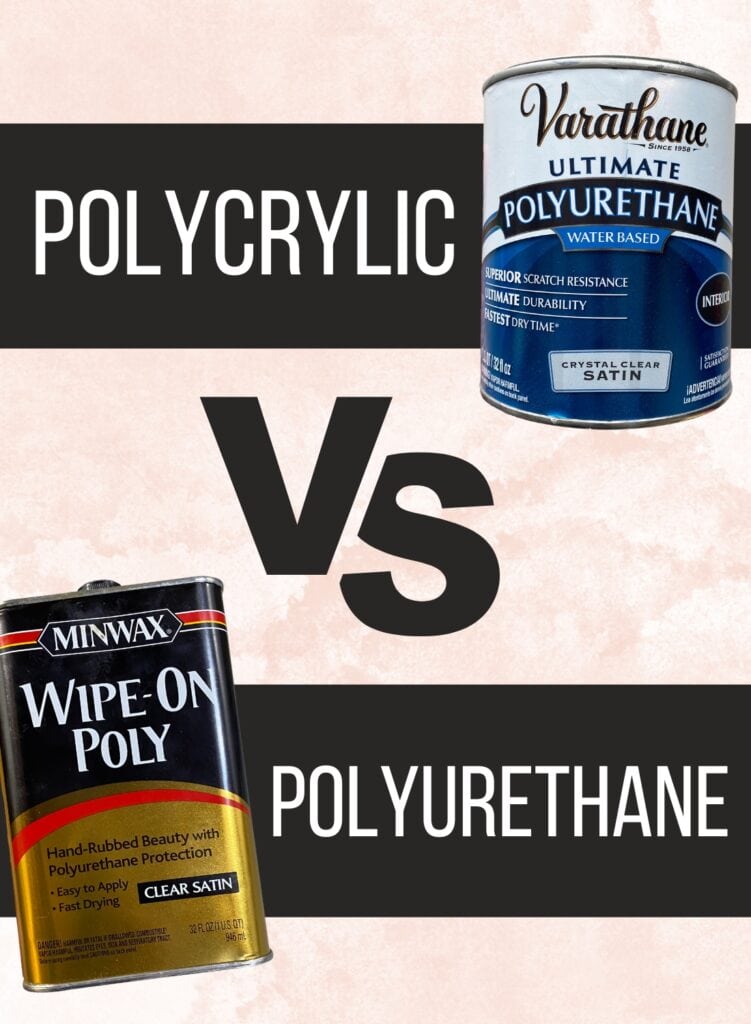
When you’re looking to update your piece by either refinishing it or painting it, usually the topic of topcoating or sealing comes up! And polycrylic and polyurethane are two of the most popular topcoats for furniture.

They both offer a protective finish that can help protect your piece from scratches, stains, and wear. Polycrylic is durable and doesn’t yellow like some other finishes do. It’s also easy to apply and clean up with just soap and water. On the other hand, polyurethane offers superior protection against moisture damage while still providing a beautiful finish.
But which one is best for you? Keep reading for a more detailed comparison between these two options, so that you can make an informed decision about which product will give your furniture a better result.
As an Amazon Associate, I earn from qualifying purchases. I also may earn from other qualifying purchases with other companies or get free product to review and use. All opinions are my own.
What is the difference between polyurethane and Polycrylic?
Polycrylic (waterbased polyurethane) and polyurethane (oil based polyurethane) are two popular topcoats used to protect furniture, cabinets and other surfaces.
Although they both offer a protective finish, there are some key differences between the two that should be taken into consideration when making your choice.
The main difference between the two is that polycrylic is a waterbased product that offers a durable finish without yellowing over time, while polyurethane is an oil based product that provides superior protection against moisture damage, indoors and outdoors.
Both products have their advantages and disadvantages, so it’s important to understand the difference and their pros and cons before you make your decision.
Polycrylic (WaterBased Polyurethane)
Polycrylic is a waterbased topcoat that provides a durable finish without yellowing over time.
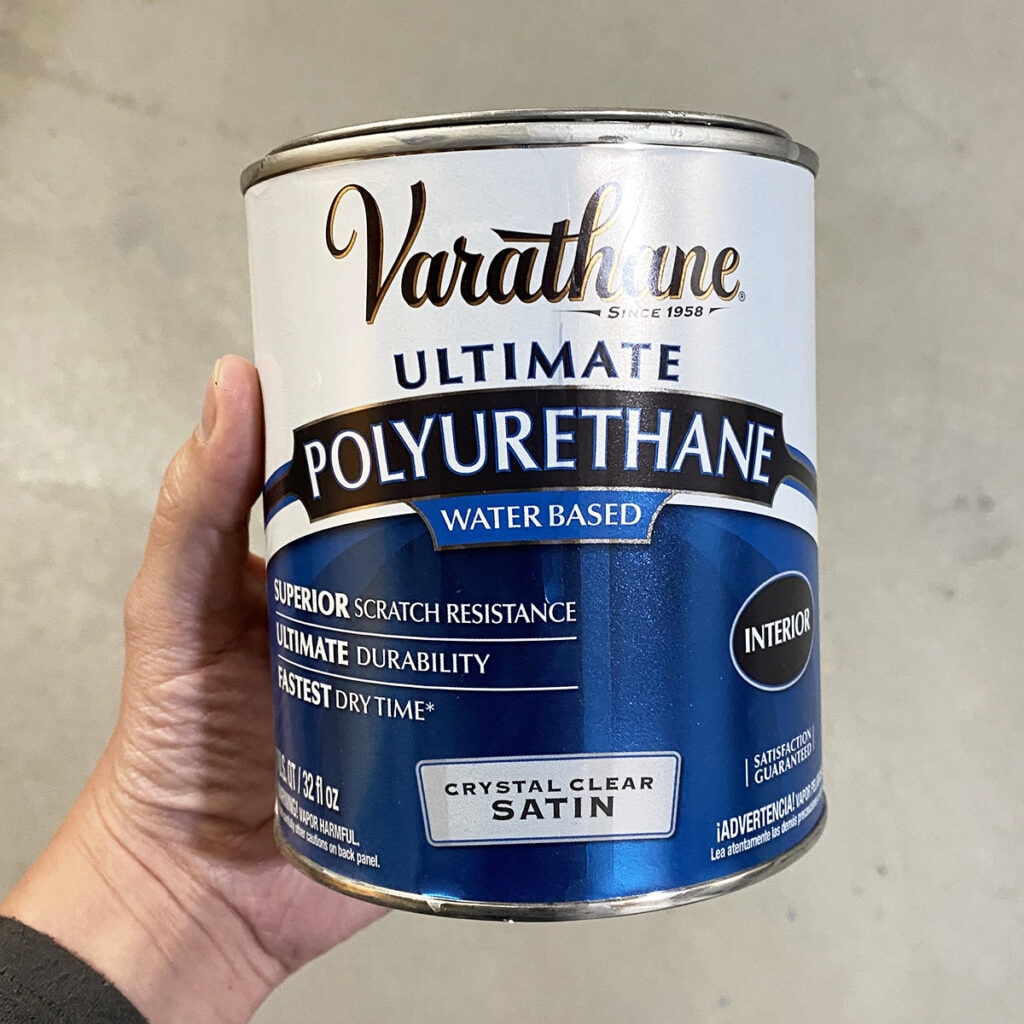
It offers superior protection against scratches, stains, and wear on furniture, cabinets, and other surfaces. It has a fast drying time and can be applied with a brush, sprayer, or even in aerosol, spray can form for easy application. Plus, it’s non flammable, and cleanup is simple with soap and water.
However, it does have some drawbacks, such as not being suitable for exterior projects, or how it can be difficult to create perfect streak free results when applying it by hand. Despite these cons, it remains an excellent choice for protecting your piece from damage while still providing beautiful results.
Pros:
- Available in Matte, Gloss, Satin, and Semi Gloss finishes
- Can be applied with a brush, sprayer, or aerosol spray can
- Fast drying – recoat in 2 hours
- Non flammable
- Easy cleanup with soap and water
- Clear topcoat with no yellowing
- Can be used on painted, stained, or raw wood
Cons:
- Not suitable for exterior projects
- Can be tricky to get a perfect streak free finish when applying it by hand
- Is not as durable as oil based polyurethane
Where to Buy Polycrylic
- Home Depot: Order Polycrylic online, pickup in store, or ship to home
- Amazon: Ship Polycrylic to home
- Ace Hardware: Order Polycrylic online, pickup in store, or ship to home
- Walmart: Order Polycrylic online, pickup in store, or ship to home
How to Apply Polycrylic
Applying this topcoat to painted furniture adds an extra layer of protection and helps maintain its beauty for years to come. But if you’re not familiar with the process, it can be intimidating. Fortunately, with the right tips and trick,s it will turn out great!
Here are some helpful tips for using polycrylic on your painted or stained furniture:
- Make sure the surface is clean and free of dirt, dust, and other debris.
- Always use a clean brush or foam sponge when applying polycrylic – old tools may contain dirt particles that could mar the finish and leave unwanted specks behind.
- Make sure to apply thin coats in order to get a smooth finish without drips or runs.
- Allow each coat to dry completely before adding another coat.
- For more detailed instructions on how to apply polycrylic to painted furniture, check out my blog post, which covers everything you need to know and secret tips to make it look perfect! If you’re going to use a sprayer, here’s how to spray polyurethane to guide you.

Polyurethane (Oil Based Polyurethane)
Polyurethane is an oil based finish that is used to protect wood surfaces.
Would you like to save this?
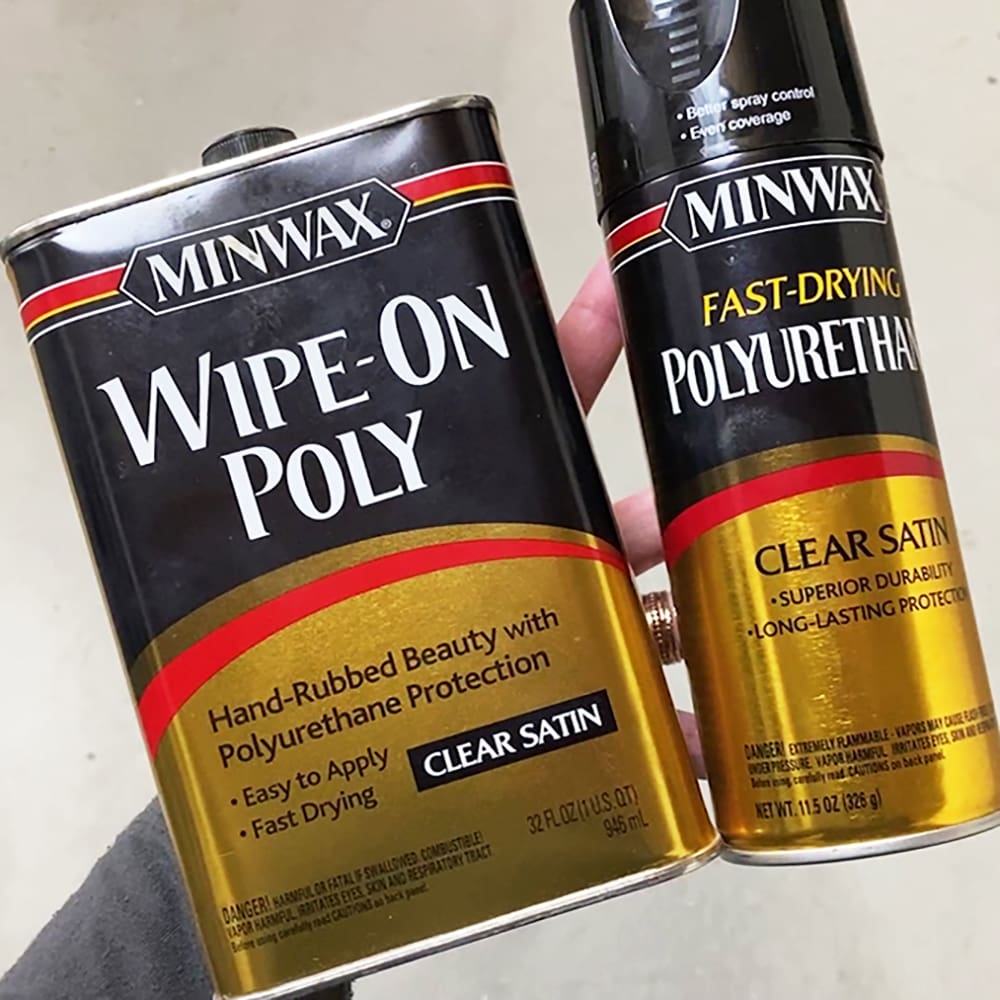
It offers superior protection against scratches, stains, and wear on furniture, cabinets, and other surfaces.
It has a strong odor but provides a durable finish. It can be applied with a brush, sprayer, or aerosol spray can for easy application. Check out the best paint brushes for polyurethane here and the best sprayer for polyurethane options here.
But cleanup isn’t as simple with mineral spirits. It is flammable, so extra care must be taken, and it can also be tricky to get a perfectly streak free finish when applying it by hand, meaning that professional results may require spraying or other advanced techniques.
Pros:
- Available in Matte, Gloss, Satin and Semi Gloss
- Can be applied with a brush, sprayer, or a spray can
- More durable than polycrylic
- Can be used to protect outdoor projects and indoor projects
- Creates a less streaky finish on really dark paint colors than polycrylic does
Cons:
- Flammable
- Can be tricky to get a perfect streak free finish when applying by hand
- Dry to the touch after 1-2 hours, recoat time is 4-6 hours
- Cleanup with mineral spirits (not as easy to clean up)
- Best for wood or dark colored finishes
- Has a strong odor
Learn more about the features and how-to’s of Minwax Polyurethane Spray here.
Where to Buy Polyurethane
- Home Depot: Order Polyurethane online, pickup in store, or ship to home:
- Amazon: (Ship Polyurethane to home)
- Ace Hardware: (Order Polyurethane online, pickup in store, or ship to home)
- Walmart: (Order Polyurethane online, pickup in store, or ship to home)
How to Apply Polyurethane
When using polyurethane, it is important to take the proper precautions and use the right techniques to make sure that you get the best results. Here are some tips for using this oil based product:
- Wear protective gear when working with it to protect yourself from fumes.
- Make sure the surface is clean and free of dirt, dust, and other debris.
- Use a high quality brush or applicator to apply it evenly and smoothly on the surface. Here’s oil based polyurethane spray for more details about spraying it.
- Allow each coat to dry completely before applying an additional coat for maximum durability.
- Clean up any spills or drips with mineral spirits immediately.
- Store unused cans of poly in an area away from heat and direct sunlight.
- Lay used rags and tools outside and flat while they dry to prevent them from catching fire in your workspace.
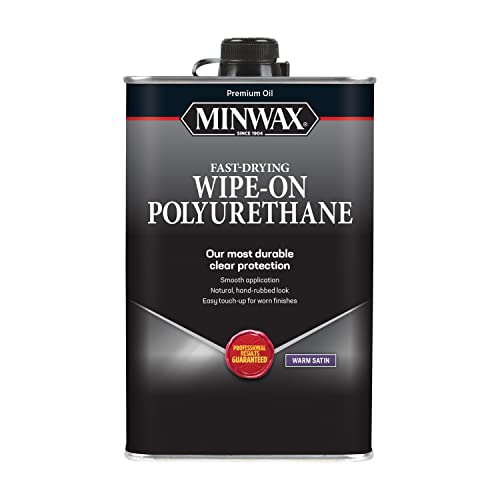
Which is better, polycrylic or polyurethane?
It really depends on what you are using it for. Polyurethane is more durable, has a stronger odor, and takes longer to dry. However, polycrylic is easier to clean up with waterbased cleaners, and has a much lower VOC content.
Even though polyurethane is more durable, polycrylic is very durable and durable enough for most DIY projects.
In conclusion, both are great finishes for protecting wood and painted surfaces. Ultimately, when deciding between these two products, you should consider what you need out of a topcoat as well as personal preference before making the best choice for your project.
Check out polyurethane vs polycrylic for dining table if you’re working with this specific piece.
Learn more about the best polyurethane for furniture here. Check out this post about the best spray for polyurethane for your options!
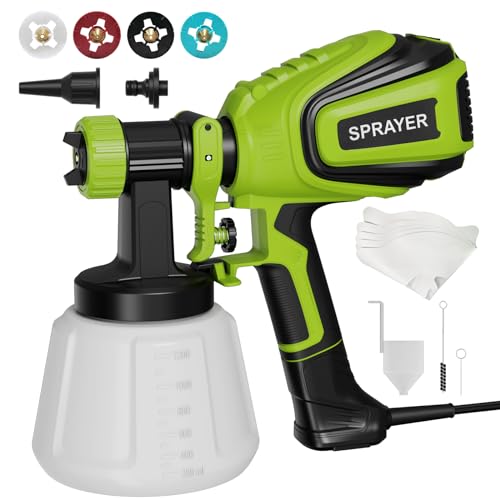


Spray Polyurethane VS Brush
If you’re torn between these two methods, don’t worry! The best choice really depends on your project, your experience, and the look you’re going for.
I love spraying for bigger projects or pieces with lots of little nooks and crannies. It gives that smooth, professional finish with no brush strokes! But I’ll be honest, it does take more prep, like taping off edges to avoid overspray, and you’ll need a little practice to get comfortable with the sprayer.
But can you use a paint sprayer for polyurethane? – Here are more answers if you ever wondered about this!
Now, brushing is my go-to for smaller projects or when I need to be precise. A good brush makes it easy to apply thin, even coats. Just be careful not to go too heavy, or you might end up with streaks or bubbles. I like to take my time, use light strokes, and build up the layers slowly.
Not sure where to start? Think about your comfort level and the finish you want. Either way, with a little care and practice, your project will turn out amazing! Here’s spray polyurethane vs brush on polyurethane for a more detailed comparison post!
More Furniture Topcoat Resources
Follow us on YouTube to get more tips for painting furniture. Or share your project with us on our Facebook Group and be part of our community. See you there!