
Best Sandpaper for Furniture Painting
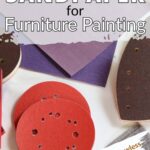
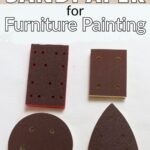
For your DIY projects, you’ll want to choose the best sandpaper for furniture painting to make your paint stick the best it can. Plus, what’s the secret to getting a perfect finish? Sandpaper! Having the right one on hand is important to give your piece that flawless finish you’re aiming for.
But choosing what to use can be confusing. With these sanding furniture tips, we’ll take you through the different types and their uses, so you’ll always have them ready in your toolkit!
When it comes to painting furniture, it’s all about the prep work. That smooth, pro finish you’re after? It starts long before you pick up a paintbrush or sprayer. Sanding is an easy yet super effective step that can take your project from “good enough” to absolutely stunning.
The tricky part is that you can’t just use any sandpaper – there are different types, each with their own advantages and disadvantages. Using the wrong kind can leave you with frustrating results, and we don’t want that!
Fortunately, with a little guidance, it’s easy to find exactly what you need. So if you’re looking to transform your old pieces into something beautiful and long lasting, read on to learn how to choose the best sandpaper!
Types of Sandpaper
Sanding Sheets
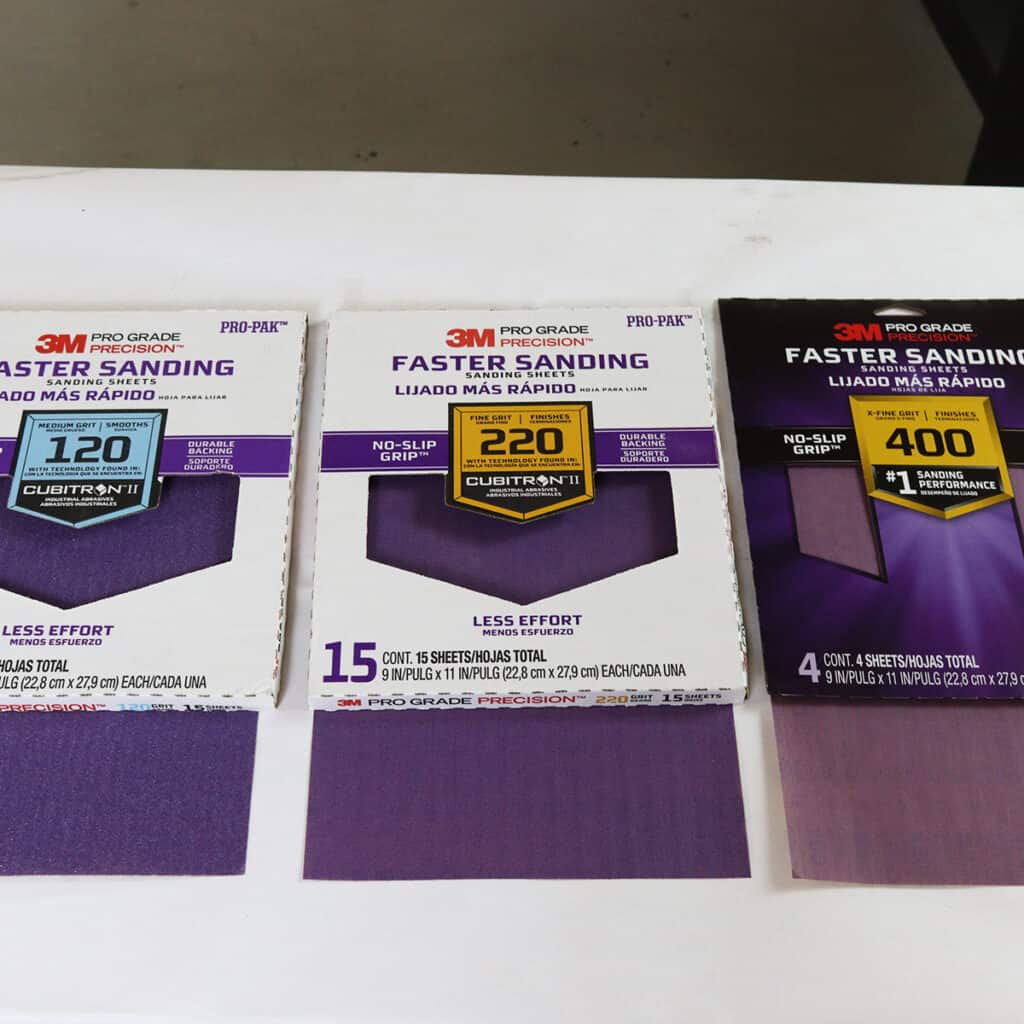
Sanding sheets are made from either natural or synthetic mineral abrasives that are glued onto paper or cloth backing. They come in various grit sizes, from coarse to extra fine, and can be used for rough and delicate sanding jobs.
While they may not last as long as other types, they offer a cost effective option for smaller projects or jobs requiring multiple grits.
Foam Sanding Pads
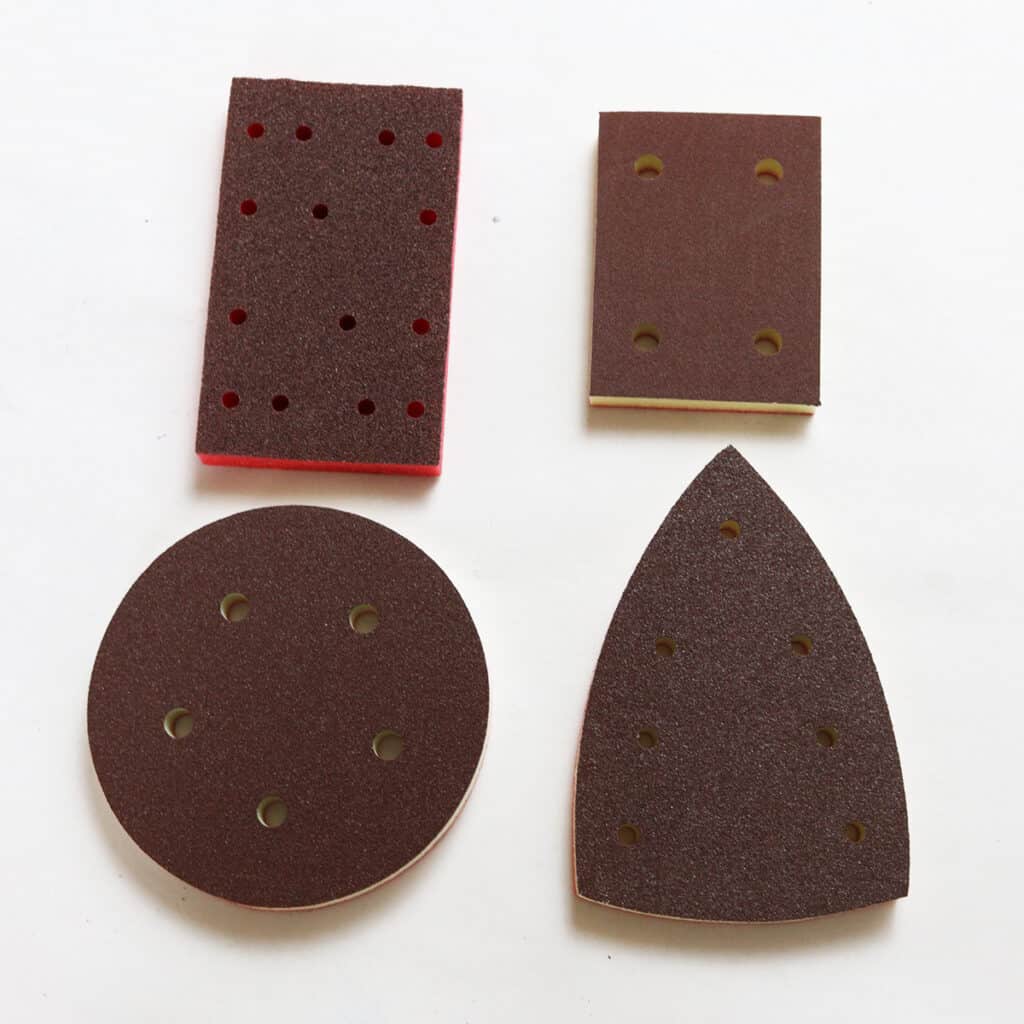
Foam sanding pads are basically sandpaper with a foam pad, providing cushioning and conformability, perfect for contoured surfaces that require extra attention during the sanding process. They come in coarse to very fine.
But they aren’t as effective at removing finishes because of the foam. Check out our blog post about foam sanding pads for electric sanders to learn more about the benefits of using them.
Sanding Discs
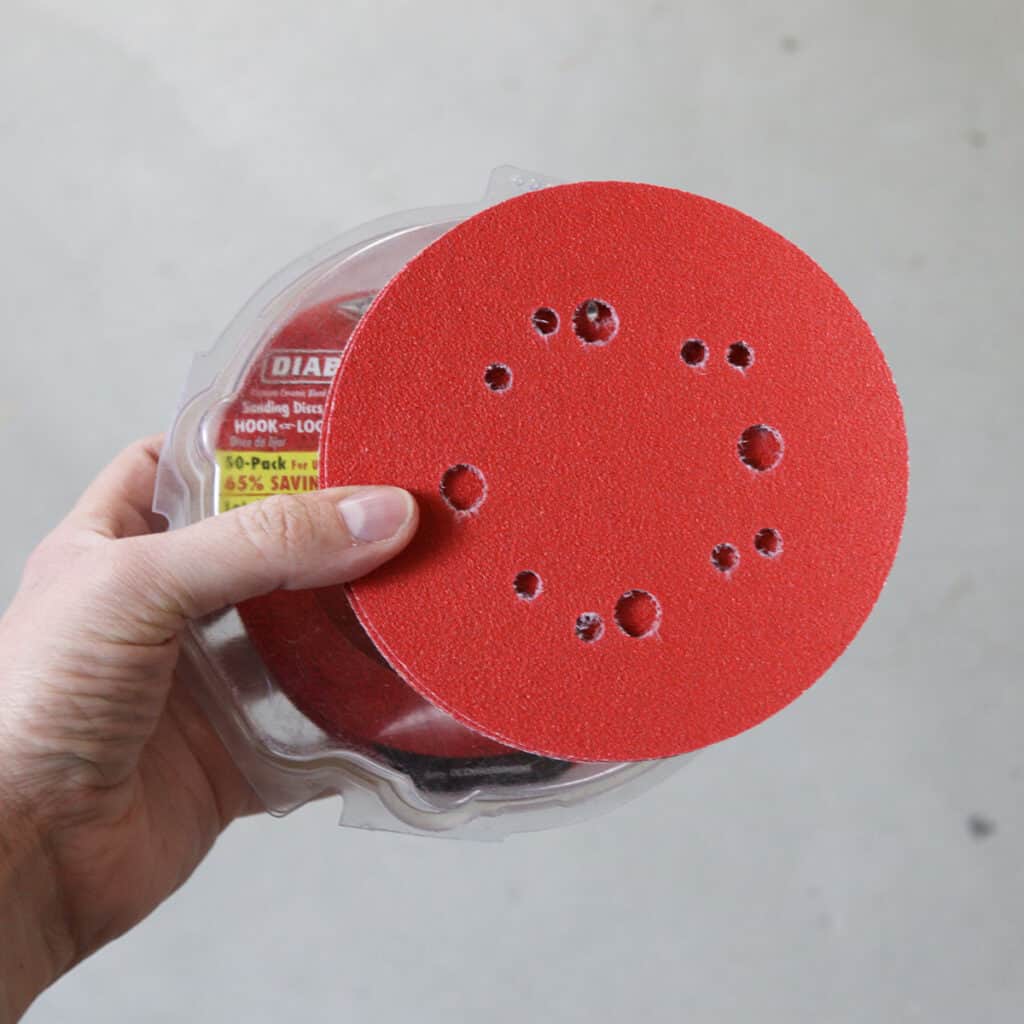
Sanding discs are circular sheets with an adhesive backing that attaches directly to orbital sanders. Check out the best orbital sanders here, and the best sanders for furniture here for more options!
These abrasive discs come in various grits and can be used for heavy duty tasks such as removing paint from flat surfaces. They offer excellent speed and efficiency, but should only be used on flat surfaces due to their aggressive nature.
Sanding Screens
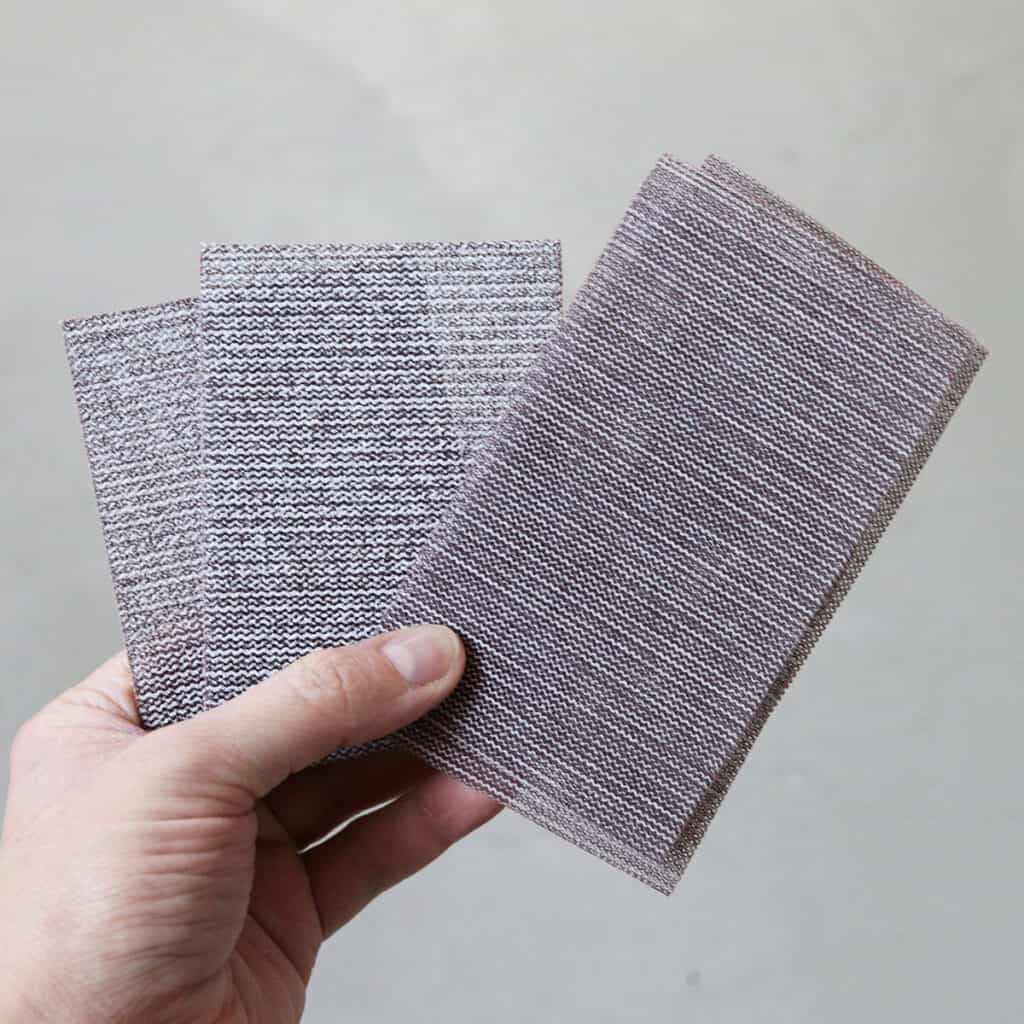
Sanding screens are sheets of a mesh like material that have small particles embedded into them. These screens can be used on both large flat surfaces as well as intricate details due to their flexible nature, which allows them to conform to curved surfaces easily while still providing ample abrasive power where needed most.
Additionally, they don’t clog up quickly like traditional papers do, so they last longer.
What are Grits for Sandpaper
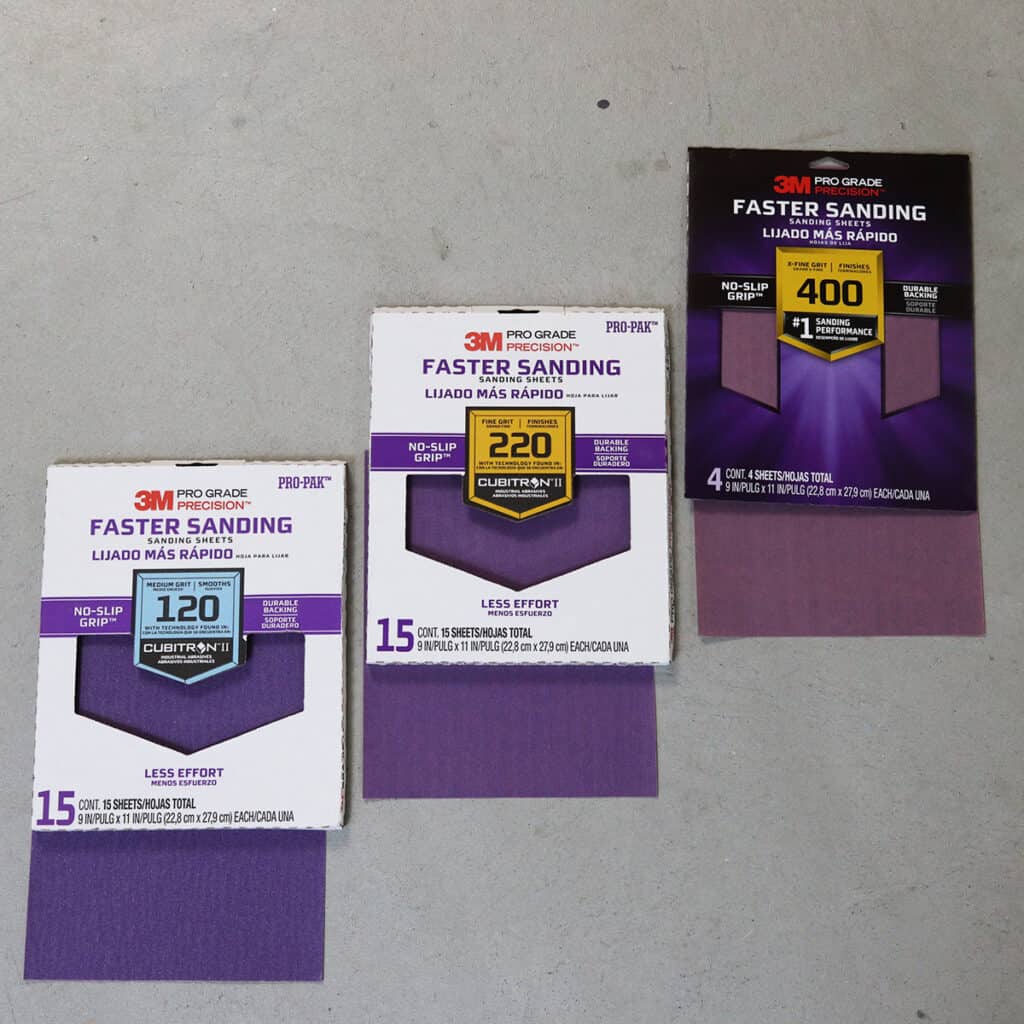
Sandpaper grits are typically found from 60 to 400 grit. Lower grit numbers indicate coarser sandpaper, while higher grit numbers mean finer sandpaper.
Coarse paper (60-80) will remove paint or stain faster than fine (120-220). However, the coarse paper also scratches more and leaves deeper marks on the surface.
Fine grit is great for scuff sanding before painting and removing light texture or brush marks from painted furniture. Coarse is great for removing finishes.
As an Amazon Associate, I earn from qualifying purchases. I also may earn from other qualifying purchases with other companies or get free product to review and use. All opinions are my own.
Best Sandpaper for Wood Furniture
Again, you want to make sure that you’re using the best for the job. There are a variety of different types available, each with its own pros and cons.
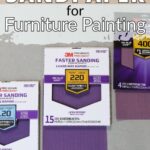
3M Pro Grade Precision Faster Sanding Sheets
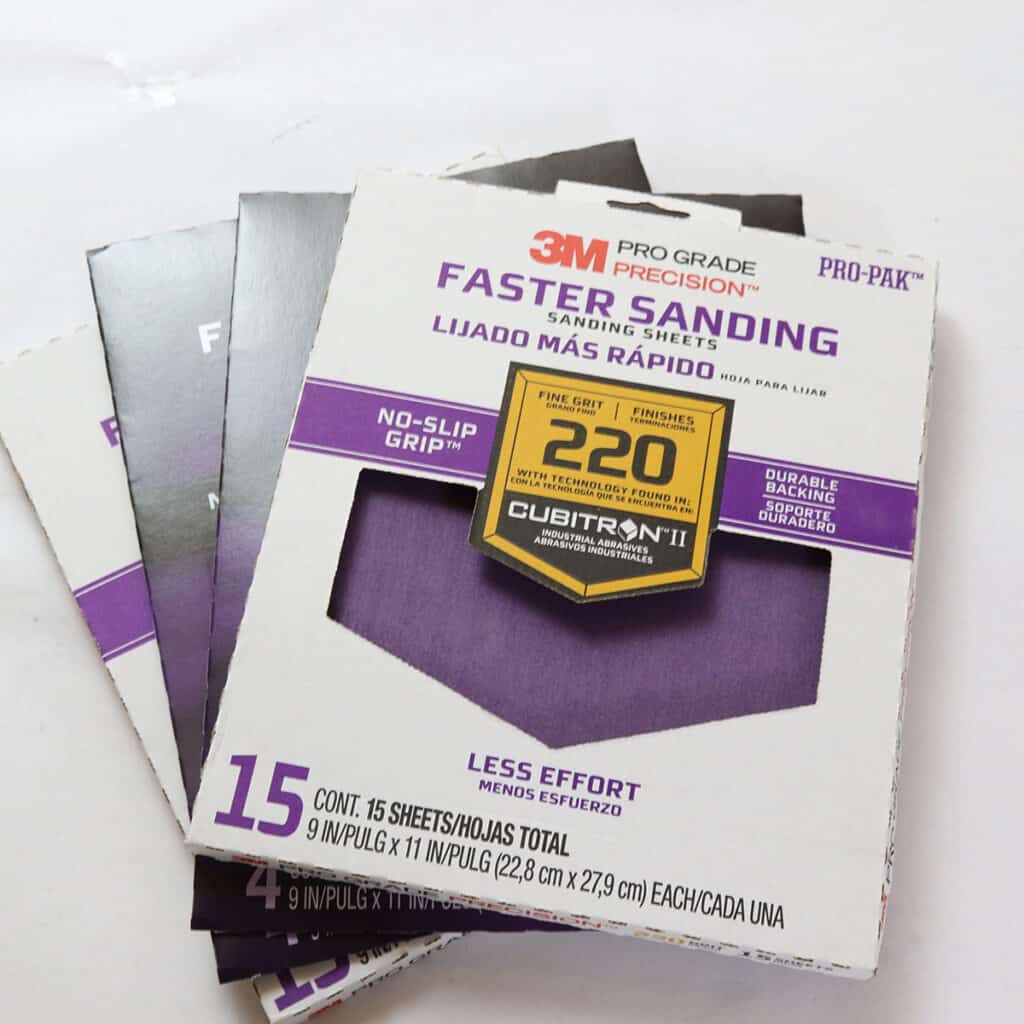
3M Pro Grade Precision Faster Sanding Sheets are some of the best. It has grits that last longer and won’t rip like other cheap options. These are the cheapest of the best types, and they are great for sanding by hand before and during your DIY project.


They also attach to palm sanders that have latches that hold on to the paper. Check out the best hand sander for furniture options here.
Would you like to save this?
SurfPrep Foam Sanding Sponges
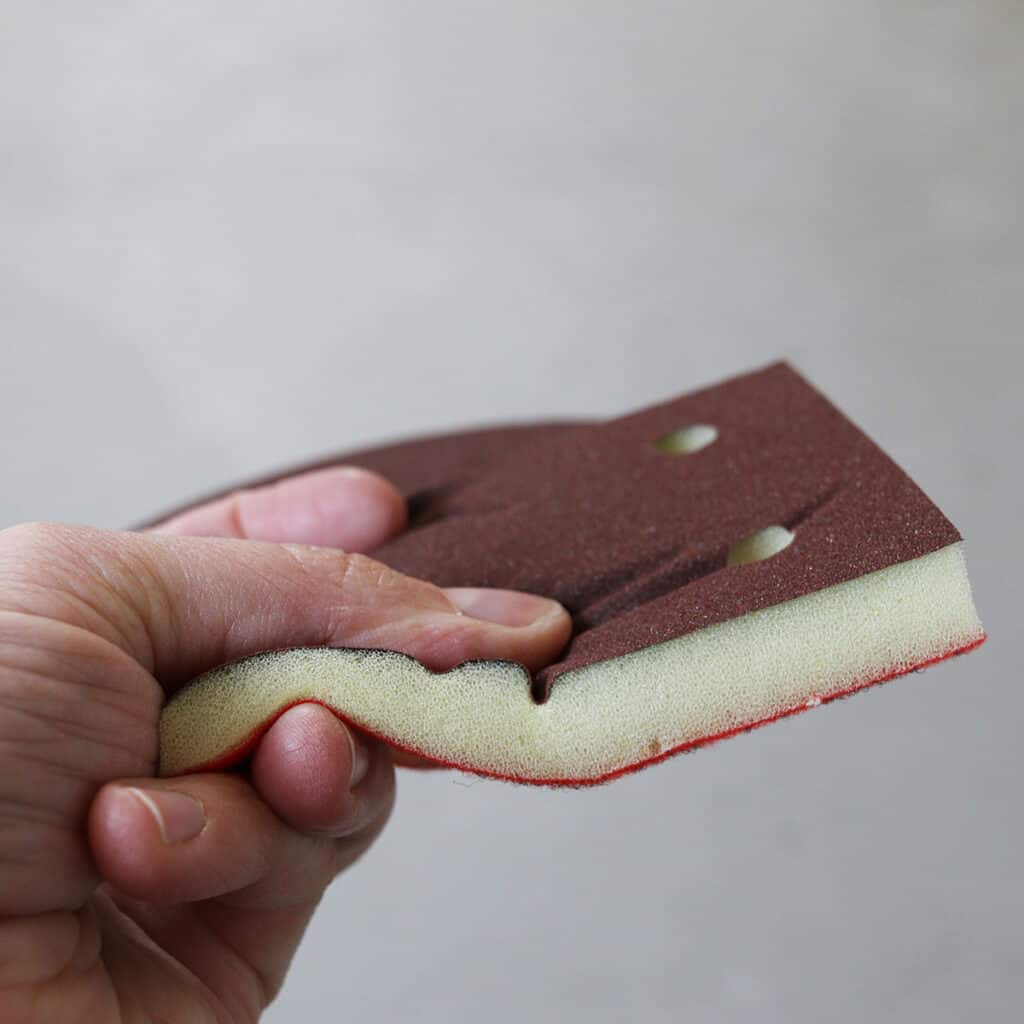
Another great choice is SurfPrep Foam Sanding Sponges, as they can contour to the shape of the furniture and allow you to work on tight spaces and details more easily. Check out this post to learn more about how to sand in tight spaces.
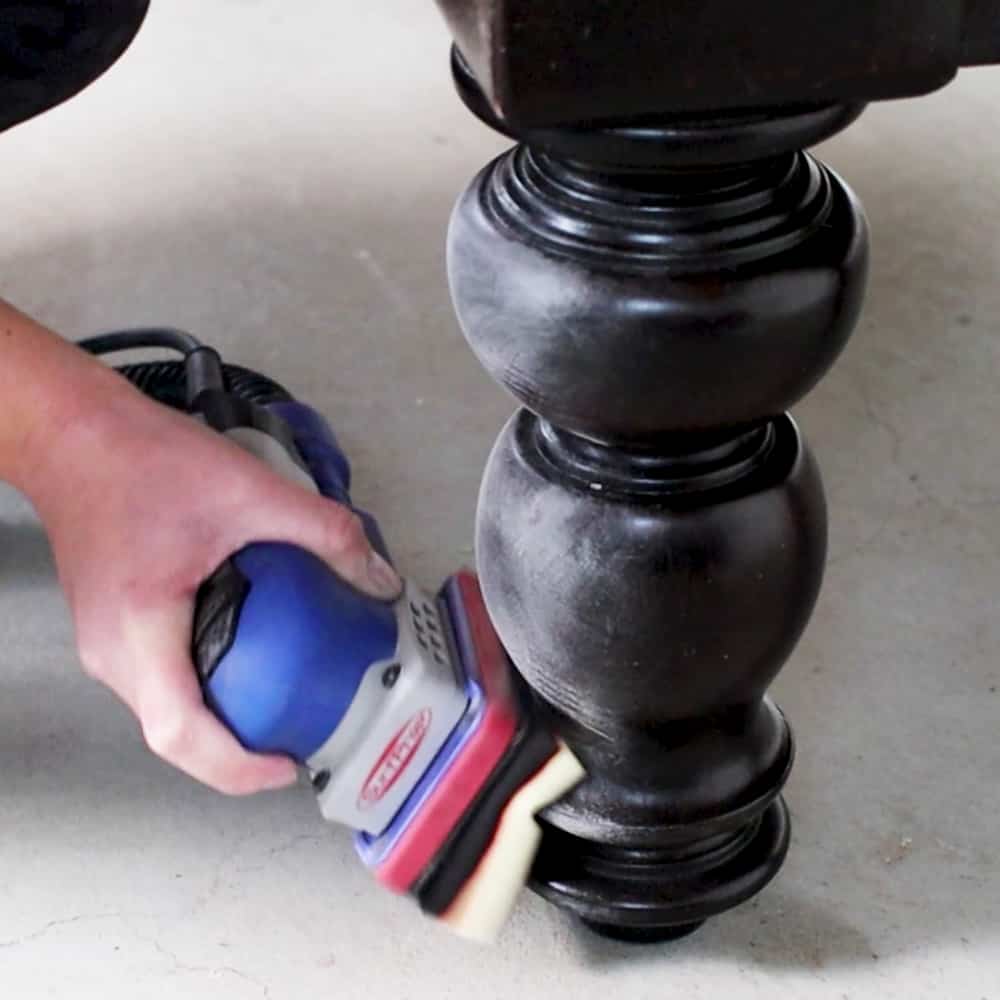
They come in a variety of sizes for 5″ orbital sanders, the SurfPrep’s 3×4″, the Festool’s RES 400 REQ, and even for mouse detail sanders. Learn more about the different types of sanders for furniture here.
They have hook and loop backing that will stick to any sander that has this backing, too. But you can also buy 3×4″ pads without vacuum holes for when you do it by hand. Learn more about SurfPrep Sanding Sponges in this post!
Sanding Screens
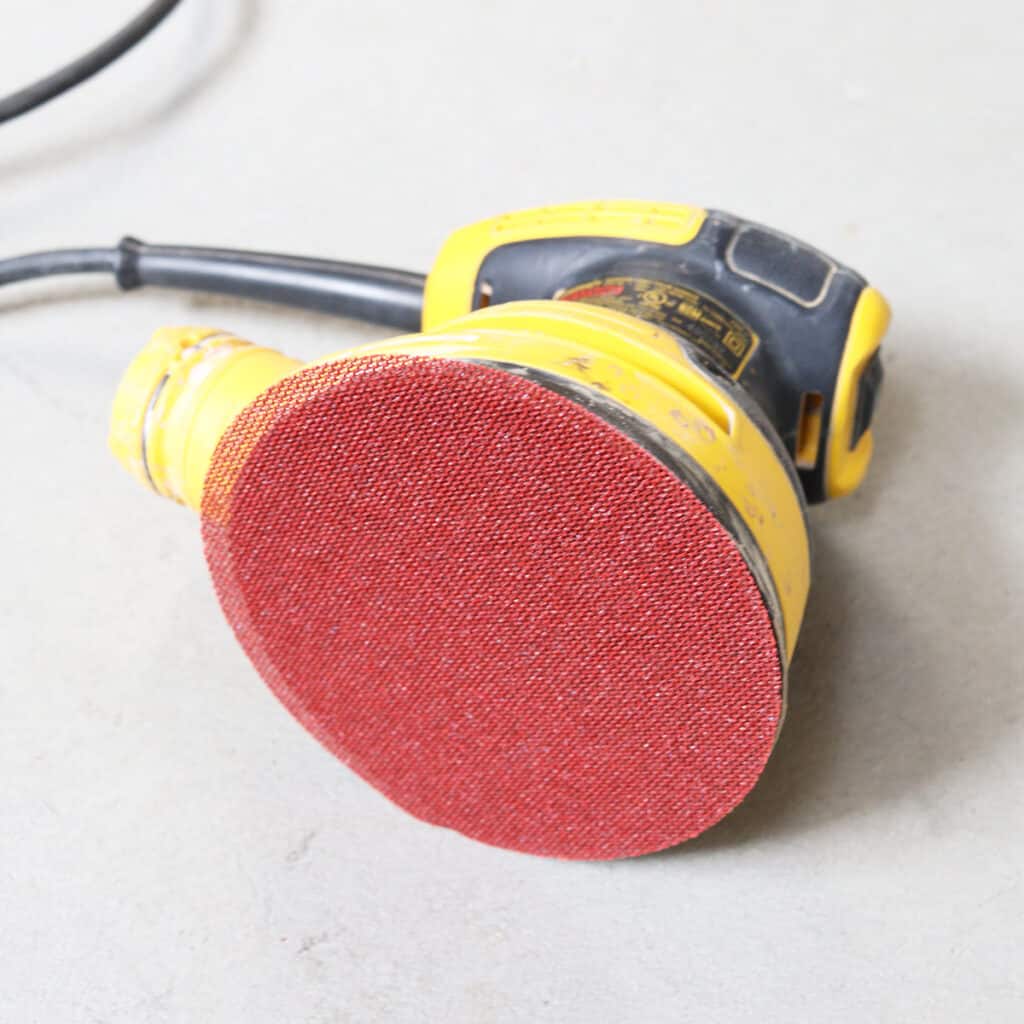
Perfect for scuff sanding or removing paint or stain from flat surfaces is the Diablo 5″ Sanding Screens. They last much longer than cheaper options, but they won’t rip and tear like those, either. Best of all, they don’t get clogged as easily.
They fit on many different 5″ orbital sanders and attach to those that have a hook and loop pad. Here’s a more detailed guide on how to attach sandpaper to hand sander.
I love to use SurfPrep’s 3×4″ sanding screens as well. They are very similar to the Diablo ones but in a smaller, rectangular shape. Learn more about SurfPrep Sandpaper here for your sanding needs.
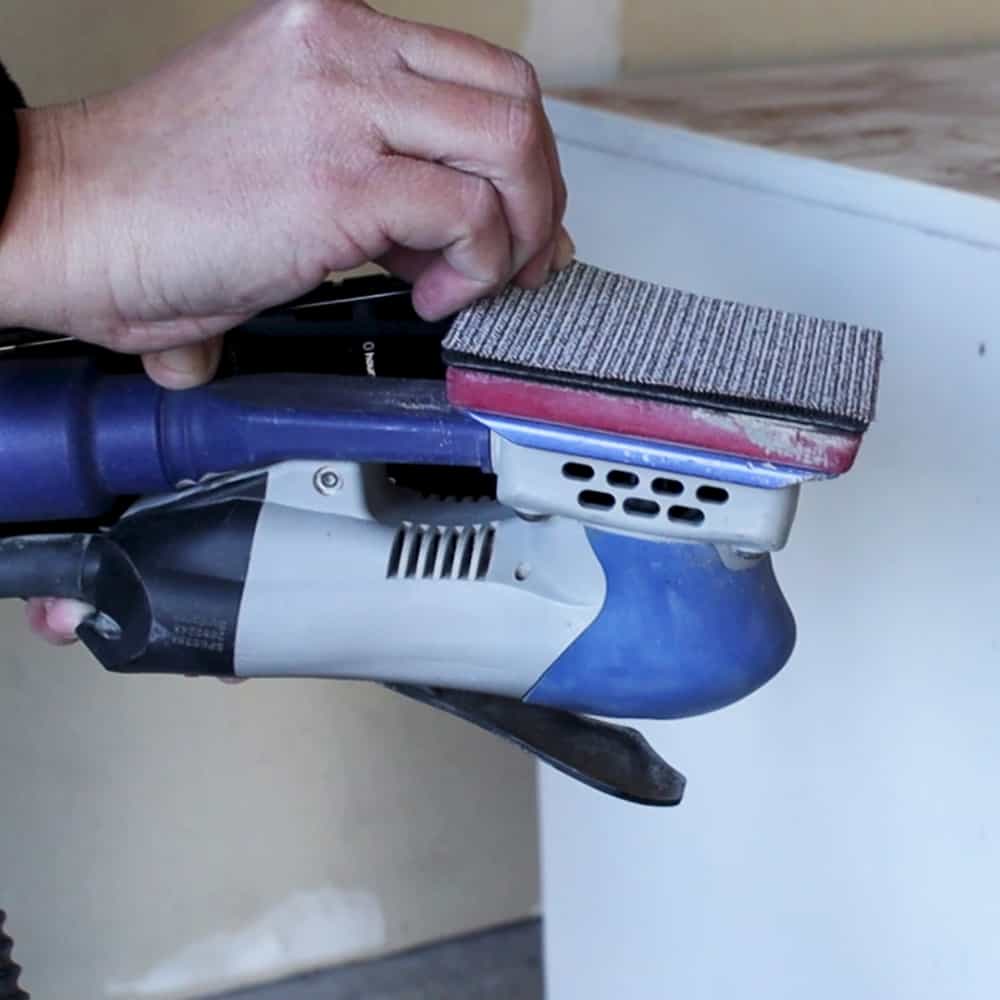
I have used the Diablo sanding screens on my SurfPrep Sander, even though they are a different shape.
What Grit Sandpaper for Wood Furniture Before Painting?
Sanding first is an important step in creating a professional finish. You can learn more about the importance of sanding before painting furniture here. And all the basics from our sanding furniture for beginners guide.
My go-to is 220 grit because it lightly scuffs the surface without leaving deep scratches like you might get if you use a lower number, like 150 or 180.
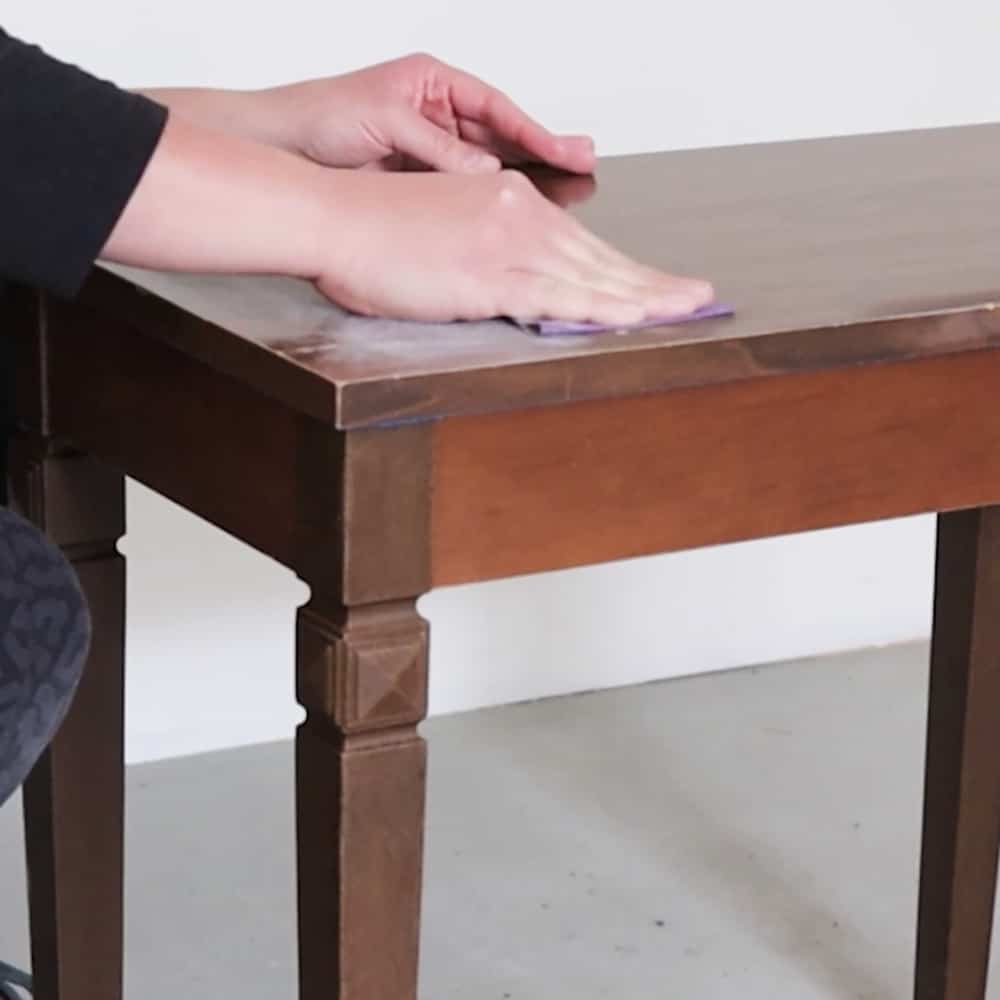
I feel like that makes your painted wood or laminate furniture look better. And the paint will stick better than if you didn’t sand at all. Here’s more information about sanding for paint prep and how to create a smooth surface before painting.
What Grit Sandpaper to Use Between Paint Coats?
Sanding between coats can make all the difference between an amateur and a professional finish. It can help remove brush marks or texture that was left behind by your brush, roller, or sprayer.
Some say that it helps the paint stick to itself… but I think that only really matters if you have to let it cure before painting over it.
What Grit Sandpaper to Smooth Paint?
If you want a smooth, professional look, it’s important to sand between each coat. 220 grit will help you quickly remove brush marks and texture that come from how you applied the paint.
If you just need light smoothing and no distressing, consider using 400 grit, which is ideal for smoothing your finish out very slightly. It won’t distress as much as 220 will.
Just make sure the finish is fully dry before lightly rubbing it, or else your paper will get clogged up. Here’s more on how to distress furniture with sandpaper, and learn more about distressing furniture techniques here if you want this look for your piece.
What Grit Sandpaper to Use Between Polyurethane Coats?
Sanding between coats of polyurethane is also important if you want your painted piece to look and feel professional. Use 400 grit to lightly smooth out each coat of polyurethane after it has dried. Then remove the dust and apply another coat of poly.
Don’t use anything lower than 400 – if you do, you’ll end up with scratches that will show right through the next coat of polyurethane.
What grit sandpaper to scuff paint to repaint?
If you are repainting furniture, use 220 grit to scuff up the existing finish and help the new paint stick better. If the original finish has scratched off or is in bad shape, you may want to remove it before repainting. Otherwise, the new coat will scratch off just as easily as the original one.
Check out the best tools for removing paint from wood here and learn how to remove paint from wood furniture here.
With so many different types of sandpaper available, it’s important to understand what each one does best. We hope this blog post has given you some insight into the differences between these options and which ones to use in your project.
More Sanding Furniture Resources
- Best Sanders to Remove Paint
- Best Paint for Furniture Without Sanding
- SurfPrep Sander Reviews
- How to Sand Curved Surfaces
- Festool RTS 400 REQ Sander Review
Follow us on YouTube to get more tips for painting furniture. Or share your project with us on our Facebook Group and be part of our community. See you there!
Do you have a review on sand paper discs for orbital sanders? Are they all created equal?
Hey Peggy, I don’t have another review specifically on the sandpaper discs, but that’s a great idea. I’ll put it on my list of things to write about.
I wouldn’t say they are all created equal though. I really like Surfprep’s sanding screens and Diablo’s screens. They are both available in the 5″ discs. They hold up well and don’t clog as bad as others.