
How to Paint Furniture Indoors Without Making a Mess



Sometimes, it’s just not possible to move furniture outdoors. Maybe it’s the cold climate, or it’s way too hot outside, or the piece of furniture is just too big. So, you want to paint it indoors! This blog post is all about how to paint furniture indoors without making a mess.
I’d like to share some tips for setting up a workspace, protecting the floors, and managing the paint fumes in the room, so you can tackle these painting furniture ideas without stressing about cleanup. Let’s get started!
When I first started painting furniture, I painted indoors. I actually painted in my kitchen. It was a tiny two bedroom apartment, and everything was carpet except for the kitchen, so I painted there.

You may also be in a similar situation, with not enough space, with no backyard or garage to turn into a painting area. Add in weather. It could be winter or summer where you’re at, not to mention unpredictable conditions like rain or wind.
But don’t worry! With some prep tips and a few simple tricks, you can confidently paint your furniture indoors without messing up your living space. Keep reading to learn how and give it a try on your next DIY project!
How to Protect Floor When Painting
The biggest thing to remember is that if you’re using a paintbrush, sometimes paint might splatter or spill, so it’s always best to make sure you have protection underneath where you’re working and for a couple of feet in every direction. That way, wherever your paint is, you’ve got protection from it getting on the floor or the carpet.
I try to make sure that when I paint indoors, I’m not painting over carpet. I’d much rather paint on laminate or wood floors because it’s way easier to clean up paint if it spills.
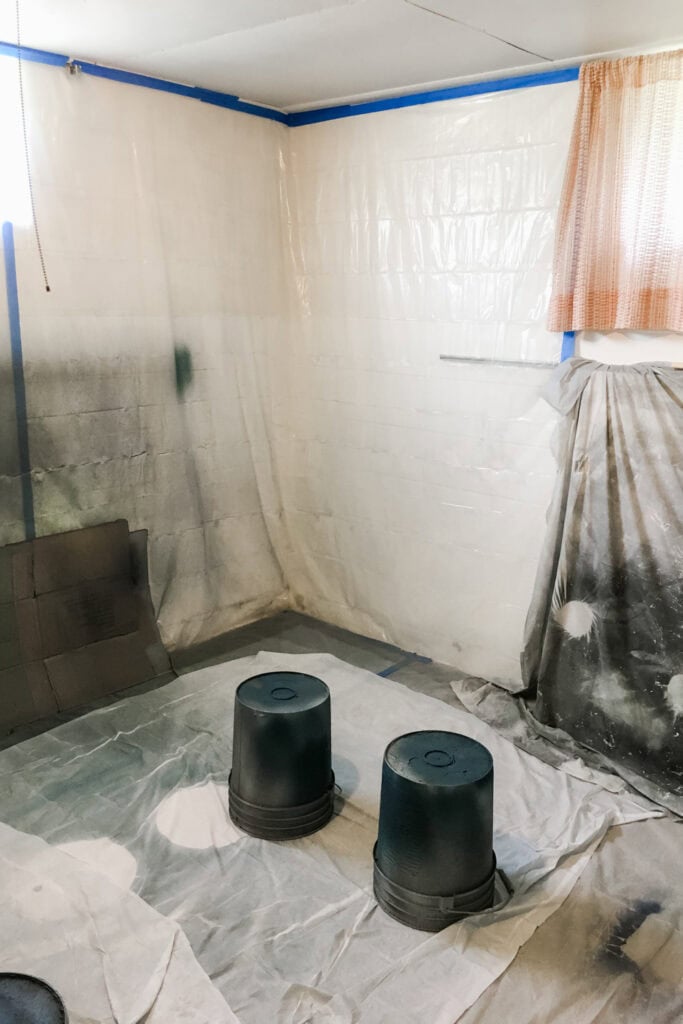
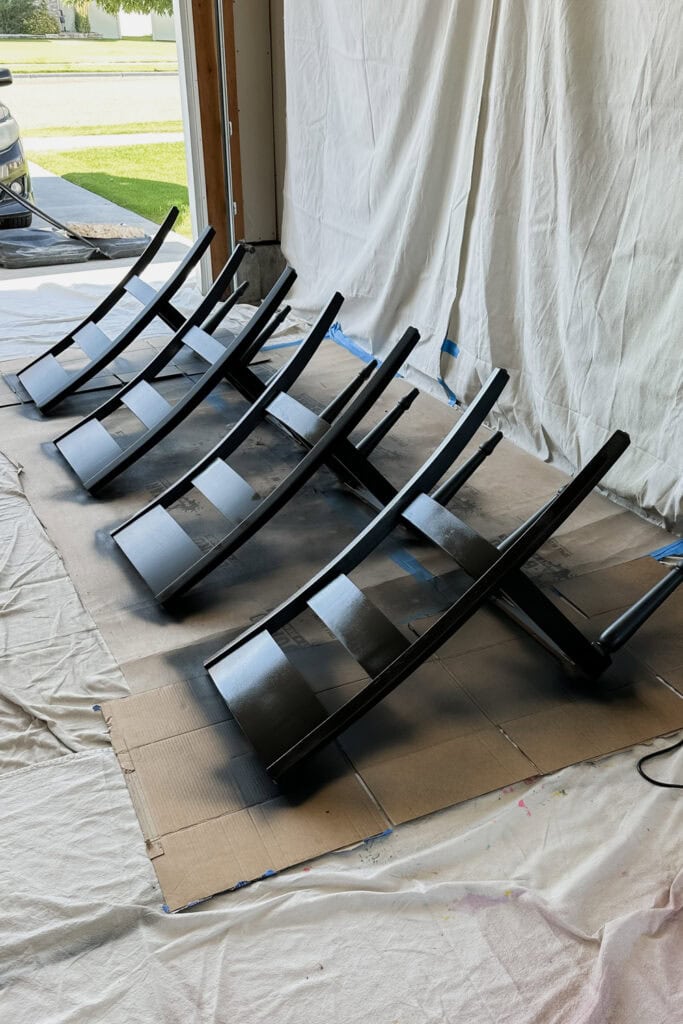
So, protect your floor and everything right around it. What I like to do is use a drop cloth, cardboard, or both. It could be actual cloth or just some plastic shower curtain liners from the dollar store. Just make sure you protect the floor from getting paint on it.
Managing Paint Fumes
Most paint is water based these days, so it doesn’t really have much of a smell. If you’re using oil based paints, make sure to have your windows open and at least one fan bringing fresh air from outside in, or pointing it out the window to push the paint fumes outside.
Make sure to have at least two windows open if you can. That way, there’s a breeze, so the ventilation can blow the air out one way and bring fresh air in the other. The fan really helps keep the paint fumes from getting too strong. Again, that’s if you’re using oil based paint, which has strong fumes.
If you’re using water based paint, fumes shouldn’t be an issue. You shouldn’t have to open your windows to air it out, unless you want to or you’re really, really sensitive to smells.
As an Amazon Associate, I earn from qualifying purchases. I also may earn from other qualifying purchases with other companies or get free product to review and use. All opinions are my own.
Would you like to save this?
Spray Painting Indoors
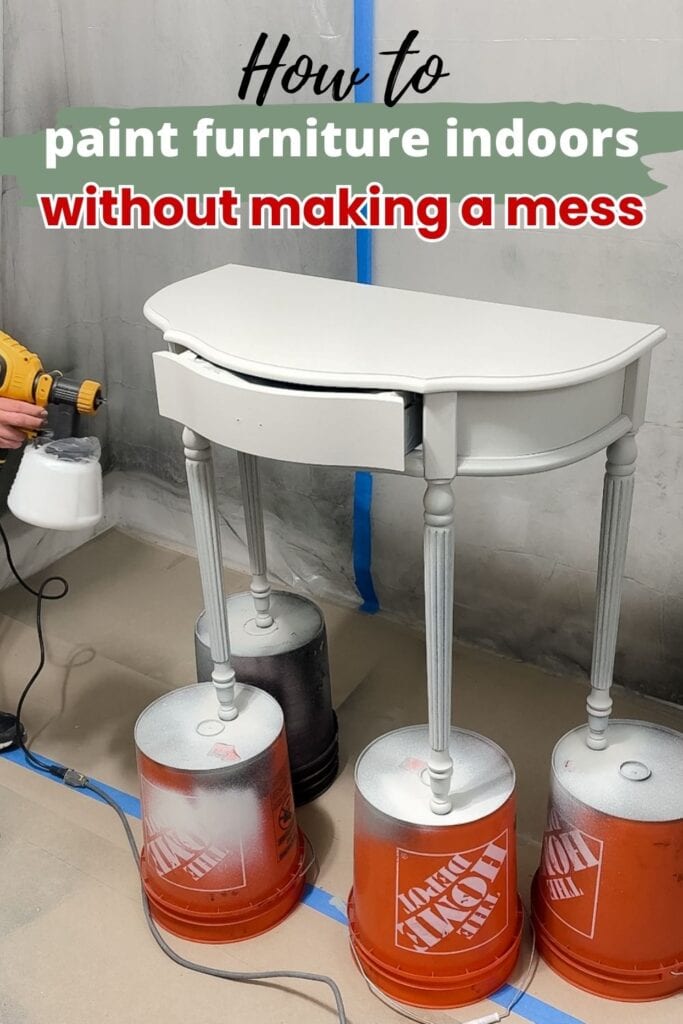
One more thing: If you want to spray paint indoors, that’s a bit harder. The spray goes further (or can go further), and you can get overspray in the area. Paint droplets get in the air, dry, and then land on other surfaces.
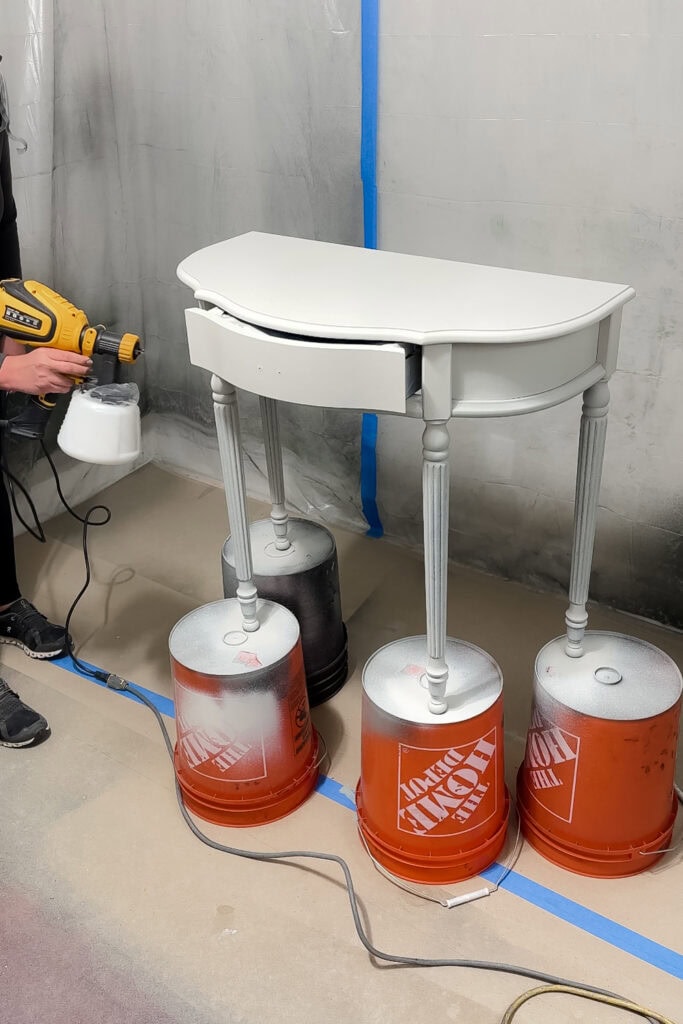
If you’re using oil based paint, the droplets don’t dry in the air, so wherever they settle, you’ll get oil based spots. You really need to be careful and protect your surfaces more if you’re using oil based paint or if you’re spraying paint.
Start by grabbing pre taped plastic. This stuff is super handy because it combines painter’s tape and plastic sheeting in one roll! Use it to cover furniture, nearby walls, or even the floor. Just unroll the tape along the edges of the area you’re protecting, press it down securely, and let the plastic drape over the surface.
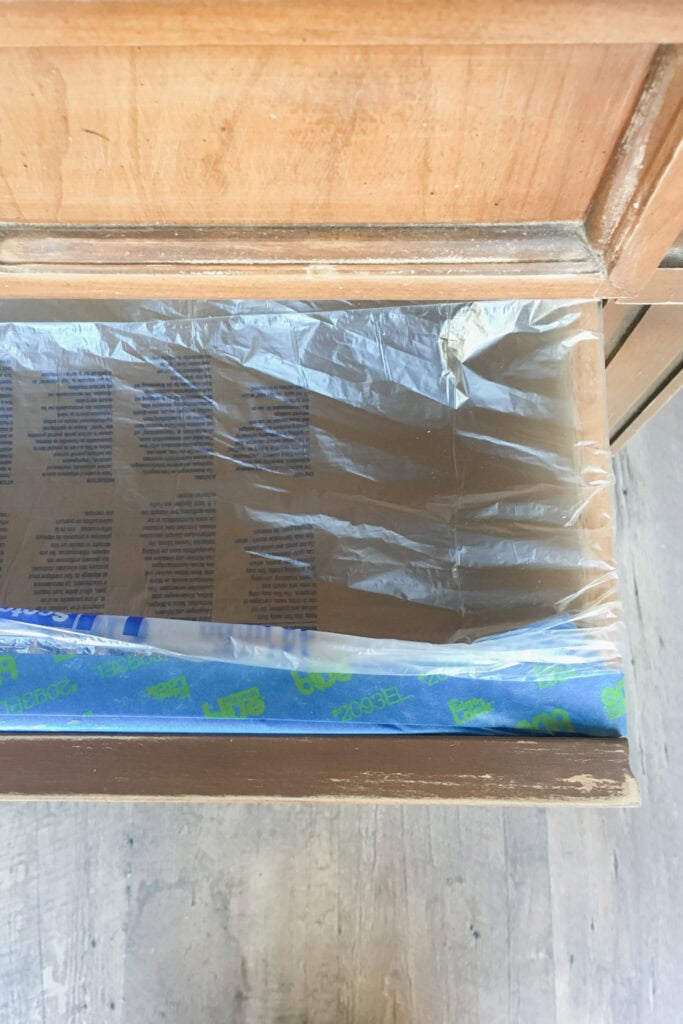
Press the tape down firmly to make sure there aren’t any gaps where paint could sneak through. Or if you already have plastic or any covering on hand, you can use painter’s tape. Learn what is the best painters tape in this post, and you can also learn how to prevent paint bleed through painter’s tape here.
I have a more detailed guide on spray painting indoors here, and you can find more tips on how to prevent overspray when painting furniture here.


Minimizing the Clutter
Being in a clutter free zone makes painting more fun and way less overwhelming. Start by removing unnecessary items from your workspace. If you can, move them to another room. This helps them to be paint free, too.
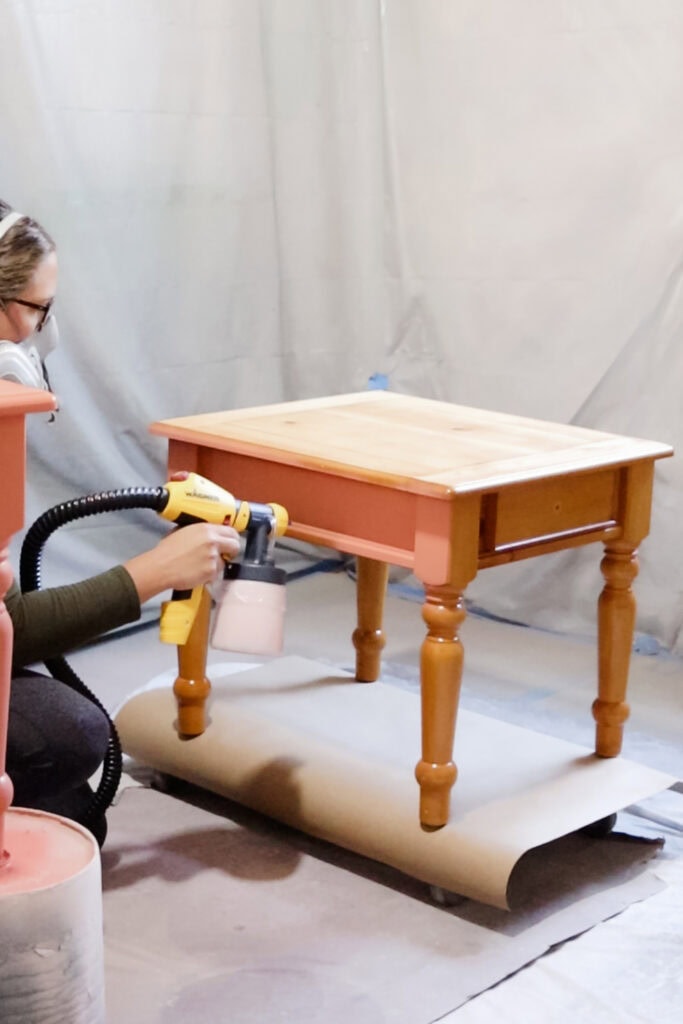
Keep your supplies and tools close and organized as well. It makes it much simpler to find anything quickly, and this way, you also won’t have to constantly move around while painting, which can lead to accidents and spills. This helps you stay safe and finish your furniture makeover quickly and easily.
By prepping your space, you’ll make sure the paint ends up exactly where you want it, and nowhere else! A little time spent doing these simple steps goes a long way for a stress free and mess free painting project.
More Painting Furniture Tips
- How To Tape Off Drawers For Painting With A Paint Sprayer
- Painting Furniture With Wall Paint
- Updating Oak Furniture: How to Get a High End Look (Without Replacing It!)
- How To Paint Wicker
- Why Most People’s Furniture Paint Jobs Fail (and How to Fix It)
Follow us on YouTube to get more tips for painting furniture. Or share your project with us on our Facebook Group and be part of our community. See you there!